The discharge valve is mainly used for the bottom discharge of reactors, storage tanks and other containers. It is connected to the bottom of the storage tank and other containers with the help of the bottom flange of the valve, thereby eliminating the residual phenomenon of process media at the outlet of the container. The discharge valve can be divided into a discharge ball valve and an upper and lower expansion discharge valve according to the actual needs. The discharge ball valve can be divided into an oblique-mouth discharge valve and a flat-mouth discharge valve. The parts of this product that come into contact with the medium during operation are lined with corrosion-resistant fluoroplastics. The product can withstand any corrosive medium except "molten alkali metals and elemental fluorine" and is widely used in chemical, petroleum, pharmaceutical, food, steel smelting, papermaking, hydropower, environmental assurance and other industries. Various operating methods, such as: manual, pneumatic, electric, etc.
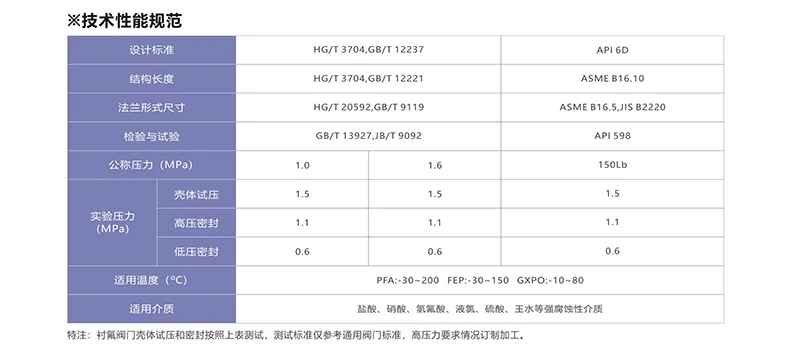
Product parameters
Product name: Fluorine-lined discharge valve
Model: FQ41F46, etc.
Lining material: FEP, PFA, GXPO, etc.
Drive mode: manual, worm gear, electric, pneumatic, hydraulic
Product features:
The working principle of the fluorine-lined ball discharge valve is to make the valve unblocked or blocked by rotating the ball. The valve disc and the inner side of the valve body are all made of fluorine plastic lining technology. It has the advantages of light switch, small size, reliable sealing, simple structure, convenient maintenance, and wide range of use.
Design features:
- Small fluid resistance, fast opening and closing speed, simple structure;
- It has extremely high chemical stability and can be applied to any highly corrosive chemical medium;
- With full-bore and floating ball structure, the valve can be closed without leakage in the entire pressure range, which is more convenient for ball sweeping and pipeline maintenance of the pipeline system;
- The ball of the opening and closing part is cast (forged) as one, eliminating the possibility of the valve stem impacting the pressure-bearing part due to pressure changes, and fundamentally ensuring safety in use;
- The structure is compact and reasonable, and the inner cavity of the valve body is minimal. Reduced medium retention, in addition, the special molding process makes the sealing surface density good, and the combination of herringbone annular PTFE packing makes the valve achieve zero leakage.